
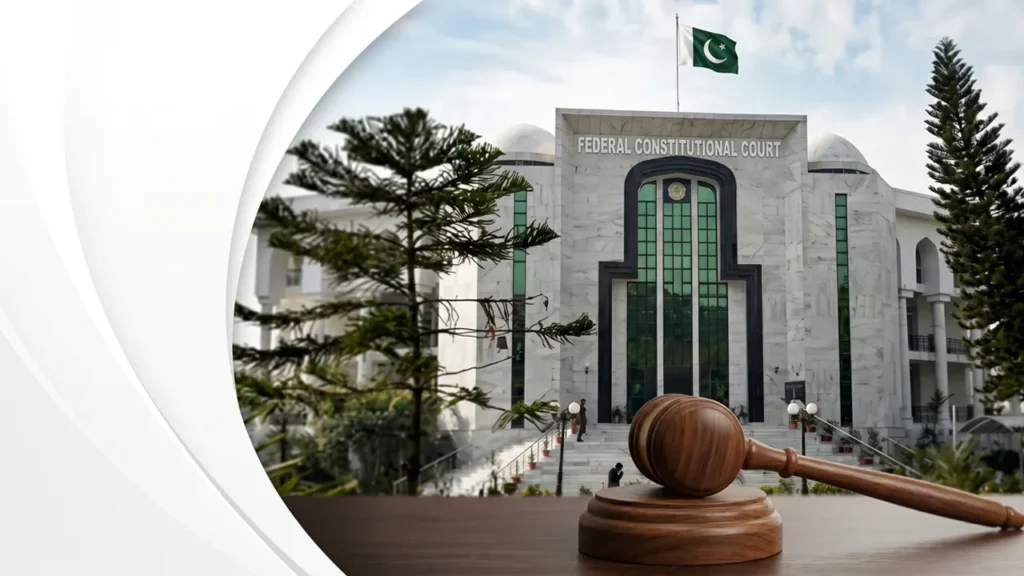
In a historic ruling with far-reaching consequences for Pakistan’s real estate sector, the Federal Constitutional Court has struck down Section 7E of the Income Tax Ordinance, 2001 — declaring it unconstitutional and void from its very inception.
Pakistan’s taxpayers, property owners, and real estate stakeholders can breathe a collective sigh of relief following a landmark judgment by the Federal Constitutional Court. The Court has held that Section 7E of the Income Tax Ordinance, 2001 is ultra vires the Constitution — meaning it exceeded the constitutional authority of the Federal Government — and is therefore void ab initio, i.e., invalid from the moment it was enacted.
This ruling resolves a prolonged legal controversy that had caused uncertainty, compliance pressure, and financial burden across Pakistan’s property market since the provision was introduced through the Finance Act, 2022.
What Was Section 7E? Understanding the Deemed Income Tax
Section 7E was introduced through the Finance Act, 2022 and inserted into the Income Tax Ordinance, 2001. In essence, it imposed a federal tax on deemed income arising from immovable property — even in cases where a property owner received no actual rent or any other income from the property whatsoever.
Under this provision, the law artificially assumed that a property was generating income based on its fair market value, and then taxed that notional or deemed amount. This meant a property owner holding vacant land or an unrented residential property could still face a federal tax liability purely on the basis of a legal fiction — not any real income.
In plain terms: If you owned a plot of land that generated zero rental income, Section 7E still treated it as if you had earned income equal to a percentage of its market value — and taxed you accordingly.
Why Was Section 7E Constitutionally Controversial?
The core legal objection to Section 7E centred on Pakistan’s constitutional division of taxation powers between the Federal Government and the provinces. The Federal Government is constitutionally empowered to levy taxes on income. However, the taxation of immovable property as such falls within the provincial domain under Pakistan’s constitutional framework.
Critics and taxpayers consistently argued that while Section 7E was framed as an income tax provision, it was, in substance, a tax on the ownership of immovable property — dressed up in income tax language. By taxing a notional deemed income from property merely by virtue of its fair market value, the Federal Government was effectively imposing a property tax, thereby transgressing constitutional limits.
This constitutional challenge was litigated across multiple High Courts, yielding conflicting results. The Lahore High Court and Sindh High Court upheld the provision, while the Peshawar High Court and Balochistan High Court struck it down. The matter was finally referred to and decided by the Federal Constitutional Court.
The Federal Constitutional Court’s Final Ruling
The Federal Constitutional Court has now conclusively resolved the controversy in favour of taxpayers. The short order of the Court contains the following key determinations:
- 1Section 7E isultra viresthe Constitution of Pakistan.
- 2Section 7E stands struck down as voidab initio— meaning it is treated as if it never existed in law.
- 3Taxpayers’ petitions challenging the judgments of the Lahore High Court and Sindh High Court have been allowed.
- 4FBR/CIR petitions challenging the judgments of the Peshawar High Court and Balochistan High Court have been dismissed.
- 5All notices, proceedings, actions, assessments, and demands raised by FBR or CIR under Section 7E have been declared without lawful authority and set aside in their entirety.
The decision is unambiguous: Section 7E has no legal standing, and every action taken under it — including tax notices, assessments, recovery proceedings, and demands — is now legally nullified.
Who Does This Ruling Benefit? Practical Impact for Taxpayers
This judgment delivers direct and tangible relief to a broad cross-section of the economy. Below are the key categories of beneficiaries:
Property Owners: No longer liable for tax on notional income from property yielding zero actual rent or return.
Real Estate Investors: Holding immovable property no longer triggers additional federal tax exposure under deemed income rules.
Developers & Housing Sector: Relief from compliance pressure and transactional complications that Section 7E imposed on the sector.
Taxpayers with Pending Cases: Those facing notices, assessments, or recovery proceedings may now seek rectification or withdrawal.
For taxpayers who have already paid tax under Section 7E, or who have filed appeals, or are currently facing proceedings under this provision, the ruling creates a strong legal basis to seek appropriate remedial action — including refund claims, appeal disposals, or withdrawal of ongoing proceedings.
Professional Analysis: Why This Judgment Matters Beyond Tax Relief
While the immediate practical benefit for taxpayers is clear, the significance of this ruling extends beyond individual relief. The Federal Constitutional Court’s decision restores the constitutionally mandated balance between federal and provincial taxation powers — a balance that Section 7E had effectively disrupted.
From a structural standpoint, the judgment is critically important for:
- Investment certainty: Removing a legally defective provision reduces uncertainty for domestic and foreign investors in Pakistan’s real estate market.
- Property market stability: Eliminating a distortionary tax on notional income supports more rational pricing and transaction activity in the property sector.
- Lawful tax administration: The ruling reaffirms that tax legislation must operate within constitutional bounds — a principle of fundamental importance for the rule of law.
The decision is not merely a taxpayer-friendly outcome; it is a structurally important correction that strengthens the constitutional integrity of Pakistan’s tax system.
Frequently Asked Questions (FAQs)
Q. What does “void ab initio” mean in the context of Section 7E?
It means Section 7E is treated as if it never had any legal effect from the very beginning. All actions, notices, and demands raised under it are legally nullified, not just prospectively but retrospectively as well.
Q. Can I claim a refund if I already paid tax under Section 7E?
The ruling creates a strong legal basis for seeking refunds. However, the specific procedural steps — including timelines and applicable provisions — will depend on your individual circumstances. Consulting a tax advisor is strongly recommended.
Q. What should I do if I have a pending notice or appeal under Section 7E?
You should immediately review your case in light of the Federal Constitutional Court’s short order. Relevant remedies may include rectification applications, appeal withdrawals, or disposal orders. Legal counsel should be obtained without delay.
Q. Does this ruling affect all provinces in Pakistan?
Yes. The Federal Constitutional Court’s ruling is binding across Pakistan. All FBR/CIR notices and proceedings under Section 7E — regardless of which province they pertain to — have been set aside.
Q. Is Section 7E permanently removed from the Income Tax Ordinance?
The Court has struck it down as unconstitutional and void ab initio. The Federal Government cannot simply re-enforce it; any future attempt to tax property through deemed income provisions would need to navigate the same constitutional constraints identified by the Court.
Immediate Action Steps for Affected Taxpayers
If you fall into any of the following categories, you should take prompt action:
- You have received a notice, assessment, or demand from FBR/CIR under Section 7E.
- You have paid tax under Section 7E and wish to explore refund options.
- You have a pending appeal or proceedings related to Section 7E before any forum.
- You are a developer, investor, or property owner who has factored Section 7E liability into your financial planning or transactions.
The time to act is now. Given that the Court has declared all Section 7E proceedings without lawful authority, early engagement with your tax advisor will be key to maximising the relief available to you.
Need Case-Specific Guidance?
For personalized advice on refund strategy, appeal impact, or withdrawal of pending Section 7E proceedings, contact us.
Regards,
Corporate Care
Cell: +92 300 5114467
Email:info@corporatecare.pk