
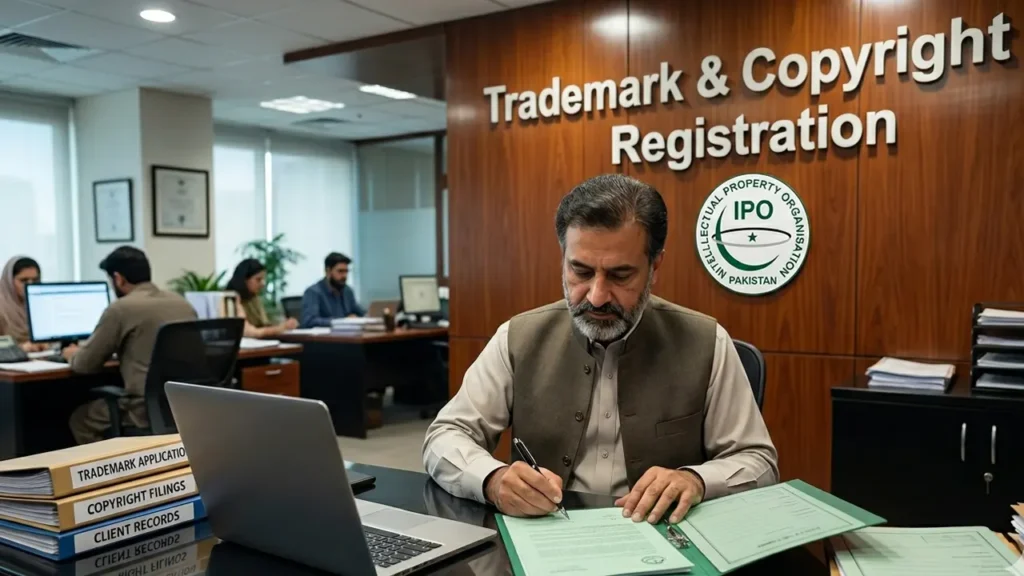
The Silent Risk That Can Destroy Your Brand Overnight
A local entrepreneur spent three years building a premium coffee label in Lahore. The beans were sourced ethically, the logo was minimalist chic, and the “loyal following” was growing by the thousands. Then, the unthinkable happened. A competitor across the city didn’t just mimic the aesthetic—they registered the name first. Within weeks, the original founder received a cease-and-desist letter. They were forced to rebrand, losing their identity, their SEO ranking, and their hard-earned trust overnight.
Not because they lacked a great product, but because they lacked a legal shield.
The Hidden Risk Most Businesses Ignore
In the fast-paced Pakistani market, many founders view intellectual property protection as a “Phase 2” luxury—something to handle once the business hits a certain revenue milestone. This is a dangerous gamble.
In reality, your brand identity—your name, logo, and unique slogans—is your most valuable intangible asset. Without formal registration through IPO Pakistan, you are essentially building a house on a rented lot without a lease. If someone else decides to claim that territory, the law heavily favors the one who holds the certificate, not necessarily the one who “thought of it first.”
What Happens When You Don’t Protect Your Brand
The consequences of ignoring brand protection in Pakistan go beyond a simple name change. When your IP is vulnerable, you face:
- Brand Theft: Competitors can legally siphon off your reputation by using confusingly similar marks.
- Revenue Hemorrhage: Legal disputes over ownership are significantly more expensive than the initial cost of registration.
- Loss of Investor Interest: Serious investors and partners look for “clean” businesses with secured assets.
- Digital Deletion: Social media platforms often require trademark documentation to resolve handle disputes or take down copycat accounts.
Expert Insight: Many small businesses only realize the importance of trademark protection after receiving a legal notice—by then, the cost of fixing it is often ten times higher than the original filing fee.
Where Trademark & Copyright Come In
Think of trademark and copyright protection as the digital and physical locks on your business’s front door. While one protects your commercial identity (the “Who”), the other protects your creative expressions (the “What”). Together, they ensure that your business security is airtight, allowing you to scale without the constant fear of infringement.
Securing these rights isn’t just about winning court cases; it’s about preventing them from happening in the first place. When you own your IP, you own your future.
What Is a Trademark? (And What It Actually Protects)
A trademark is a legally registered sign, symbol, word, or design used to identify and distinguish the goods or services of one business from those of others. In Pakistan, trademark registration provides the owner exclusive rights to the mark, preventing competitors from using similar branding that could confuse customers.
Simple Definition of a Trademark
At its core, a trademark is your business’s “commercial signature.” It tells the world that a product or service originates from you and meets your specific standards of quality. While a business name registration with the SECP or Registrar of Firms gives you the right to exist as an entity, only a trademark registered with IPO Pakistan gives you the legal right to “own” that brand name in the marketplace.
What a Trademark Can Protect
Trademark protection in Pakistan is versatile. It isn’t just for names; it covers almost anything that creates a visual or auditory link to your brand:
- Business & Product Names: The specific title you use to sell your goods.
- Logos & Emblems: The unique graphic design or “icon” of your brand.
- Slogans: Catchy phrases used in marketing (e.g., “Quality You Can Trust”).
- Packaging & Shape: Unique container shapes or color combinations that identify a product.
Real-World Examples of Trademarks
To visualize how this works, consider how these common elements are categorized:
| Element | Example | Protected by Trademark? |
| Business Name | Indus Motors / Shan Foods | ✅ Yes |
| Logo | The stylized “Golden Arches” | ✅ Yes |
| Slogan | “The Ultimate Driving Machine” | ✅ Yes |
| Product Design | A uniquely contoured perfume bottle | ⚠️ Sometimes |
What Is Copyright? (And What It Covers)
Copyright is a legal right that protects original creative works such as writing, designs, music, software, and digital content. In Pakistan, it gives the creator exclusive control over how their work is used, copied, or distributed, preventing others from profiting from their intellectual labor without permission.
Simple Definition of Copyright
While a trademark protects your brand’s identity, copyright protects the original expression of your ideas. Whether it is the code behind a mobile app, the text of a blog post, or the melody of a jingle, copyright ensures that the “creator” remains the “owner.” Under IPO Pakistan guidelines, this protection exists to encourage creativity by giving authors and artists a legal monopoly over their creations for a specific period.
Types of Work Protected
Copyright coverage is broad and evolves with technology. In the modern Pakistani business landscape, it primarily covers:
- Literary Works: Books, articles, research papers, and marketing copy.
- Software & Code: Computer programs, mobile applications, and database structures.
- Artistic Works: Graphic designs, photographs, paintings, and architectural plans.
- Cinematographic & Audio: YouTube videos, podcasts, movies, and music recordings.
Trademark vs. Copyright: Key Differences Explained
The primary difference between a trademark and a copyright lies in what they protect. A trademark protects brand identity elements like names, logos, and slogans that identify the source of goods. In contrast, copyright protects original creative expressions such as writing, software code, music, and architectural designs.
Quick Difference: Brand vs. Content
If you are protecting a brand, you need a trademark. If you are protecting content, you need copyright—but the distinction goes deeper into how long the protection lasts and what legal “lane” it occupies. While both fall under the umbrella of intellectual property types in Pakistan, they are governed by different sets of rules under IPO Pakistan.
Side-by-Side Comparison
To help you decide which protection fits your specific asset, refer to this detailed breakdown:
| Feature | Trademark | Copyright |
| Primary Purpose | Protects brand identity & reputation | Protects original creative expression |
| What it Covers | Business names, logos, slogans | Books, software, videos, designs |
| Registration Body | IPO Pakistan (Trademark Registry) | IPO Pakistan (Copyright Office) |
| Duration | 10 years (Renewable indefinitely) | Life of author + 50 years (varies) |
| Core Use Case | Business branding and marketing | Content creation and development |
Which One Do You Need?
Most modern businesses actually require a hybrid approach. For example, a software company in Karachi would use a trademark to protect its company name and app logo, but it would use copyright to protect the actual source code and the user interface design of the application.
Expert Insight: Many businesses need both—a trademark for their brand and copyright for their content—especially if they operate online where “copy-pasting” branding and content is rampant.
Trademark or Copyright — What Do You Need?
- Protecting a business name or logo? → You need a Trademark.
- Protecting a book, website content, or software? → You need a Copyright.
- Developing a unique product with its own branding? → You likely need both to ensure full legal ownership.
What Can You Register in Pakistan? (Eligibility Breakdown)
In Pakistan, trademark registration is available for brand identifiers like names, logos, and slogans that distinguish your business. Copyright registration is reserved for original creative expressions, including software code, books, graphic designs, and digital media. Understanding these specific categories is the first step toward securing your legal rights.
What You Can Register as a Trademark
A trademark is about “commercial identity.” To be eligible for registration with IPO Pakistan, your mark must be distinctive and not descriptive of the goods themselves.
- Business Names: Unique titles like “Indus Motors” or “Khaadi.”
- Logos & Symbols: Distinctive graphic marks or icons.
- Brand Slogans: Memorable taglines used in advertising.
- Product Packaging: Unique shapes or “trade dress” (e.g., a specific bottle design).
- Domain Names: If used as a primary brand identifier.
What You Can Register as Copyright
Copyright focuses on “original authorship.” Under the Copyright Ordinance, protection is granted the moment a work is fixed in a tangible form.
- Literary Works: Books, articles, blog posts, and research papers.
- Software & IT: Computer programs, mobile apps, and source code.
- Artistic Works: Paintings, photographs, maps, and architectural drawings.
- Cinematographic Works: YouTube videos, documentaries, and movies.
- Records: Music compositions and sound recordings.
What Cannot Be Registered (Important)
Not every idea or name can be legally protected. IPO Pakistan frequently rejects applications for the following:
- Generic Terms: You cannot trademark “The Mobile Shop” or “Best Biryani.”
- Descriptive Words: Marks that merely describe the product (e.g., “Cold” for ice cream).
- Common Shapes/Data: Standard calendars, height/weight charts, or basic geometric shapes.
- Ideas & Methods: You can copyright a book about a business system, but not the system itself.
- Restricted Symbols: National flags, government emblems, or names of international organizations (like WHO).
Step-by-Step Trademark Registration Process in Pakistan
The trademark registration process in Pakistan is a structured legal journey managed by IPO Pakistan. It begins with a comprehensive search to ensure your brand is unique, followed by a formal application, a government examination, and a public advertisement period before the final registration certificate is issued.
The Trademark Registration Journey
Trademark registration in Pakistan is a legal necessity, but once broken down into these specific stages, the path to ownership becomes much clearer.
1. Trademark Search & Strategy
Before filing, you must conduct a search in the IPO Pakistan trademark database. This identifies if an identical or similar mark already exists in your relevant “Class” (category of goods/services).
- Why it matters: Skipping this step is the #1 reason for application rejection.
- Pro Tip: Search for both exact matches and “phonetically similar” names to avoid future legal conflicts.
2. Filing the Application (Form TM-1)
Once cleared, you submit a formal application to the Trademark Registry. This includes your brand name, a clear copy of your logo, and the specific classification of your business.
- Why it matters: This establishes your “priority date”—your claim to the brand starts the moment you file.
- Advisory: Ensure your trademark classification is accurate; filing in the wrong class offers zero protection for your actual products.
3. Examination by the Registrar
An examiner at IPO Pakistan reviews your application to ensure it meets legal standards and doesn’t conflict with existing trademarks.
- Why it matters: The government verifies that your mark isn’t too generic or deceptive.
- Common Delay: Incomplete documentation or vague descriptions often trigger “Show Cause” notices here.
4. Response to Objections
If the Registrar raises an objection (e.g., your logo is too similar to another), you have a set period to file a written response or attend a hearing to defend your mark.
- Why it matters: This is your chance to prove your brand’s uniqueness.
- Warning: Ignoring an office action or objection will lead to the automatic abandonment of your application.
5. Publication in the Trademark Journal
If the examiner is satisfied, your trademark is “advertised” in the official Monthly Trademark Journal. This gives the public 60 days to file an “Opposition” if they believe your mark infringes on their rights.
- Why it matters: It provides transparency and prevents “bad faith” registrations.
6. Issuance of Registration Certificate
If no one opposes your application within the 60-day window, your trademark is officially accepted. Upon payment of the registration fee, IPO Pakistan issues your Trademark Registration Certificate.
- Result: You now have the legal right to use the ® symbol and take legal action against infringers.
Step-by-Step Copyright Registration Process in Pakistan
Copyright registration in Pakistan involves submitting a formal application to the IPO Pakistan Copyright Office, providing a copy of your original work, and undergoing a verification process. Once the registrar is satisfied with the originality and ownership of the work, a registration certificate is issued, providing definitive legal proof of your creative rights.
The Creative Protection Roadmap
Copyright registration in Pakistan is designed to protect your original creative work—and the process is simpler than most people think when you focus on the “expression” of your idea rather than just the idea itself.
1. Prepare Your Original Work
Before filing, your work must be in a “fixed” form. This means your software code must be written, your book completed, or your design finalized.
- Why it matters: You cannot copyright an idea in your head; it must exist as a tangible digital or physical file.
- Pro Tip: Ensure you have clear records of when the work was created to establish a timeline of authorship.
2. Application Submission (Form IV)
Submit your application to the Copyright Office along with the prescribed fee. You must include the title of the work, the creator’s name, and a brief description.
- Requirement: You are typically required to submit three copies of the work (or digital copies for software/video) for the official archives.
3. Examination & National Database Check
The IPO Pakistan examiners review your submission to ensure it meets the criteria for “originality.” They check if the work is truly a new creation or a copy of an existing copyrighted material.
- Why it matters: This stage prevents the registration of plagiarized content and maintains the integrity of the national database.
4. The Mandatory Waiting Period
After the application is formally received, there is a mandatory 30-day waiting period. This allows any other person claiming ownership of the same work to file an objection.
- Advisory: If no objections are received within this window, the process moves significantly faster toward approval.
5. Issuance of the Copyright Certificate
If the registrar finds no grounds for rejection or opposition, the work is entered into the Register of Copyrights. You will then receive an official Copyright Registration Certificate.
- Result: You now possess a “prima facie” evidence of ownership, which is essential for filing takedown notices or pursuing legal damages for infringement.
Common Mistakes in Copyright Filing
Avoid these common pitfalls that often lead to delays or rejections:
- Incomplete Work Samples: Submitting only a snippet of code or a chapter of a book instead of the full work.
- Unclear Ownership: Not specifying if the work was created by an employee (work-for-hire) or a freelancer without a proper contract.
- Incorrect Classification: Filing a graphic design as a “literary work” instead of “artistic.”
- Ignoring Queries: Failing to respond to the Registrar’s request for clarification within the stipulated time.
Expert Insight: Many creators assume uploading content to a website or social media is enough proof of ownership—but formal copyright registration provides a much stronger legal standing in court and is often required by international platforms for intellectual property disputes.
Frequently Asked Questions (FAQs)
1. What is the core difference between trademark and copyright in Pakistan?
A trademark protects your “brand identity”—specifically names, logos, and slogans that identify your business in the market. Copyright protects “original creative works”—such as the actual code of your software, the text of your books, or the design of your marketing graphics.
2. How long does the registration process actually take?
- Trademarks: Typically take 12–18 months. This includes a mandatory 2-month publication period for public opposition.
- Copyrights: Generally faster, often completed within 3–6 months, though complex software or artistic works can take longer depending on IPO Pakistan’s review.
3. Can I register both a trademark and a copyright for the same brand?
Yes, and you should. For example, you would trademark your company name and logo (identity) and copyright your website content and software code (creative assets). This creates a “dual-layer” shield for your business.
5. Is registration mandatory to start a business in Pakistan?
No, it isn’t mandatory, but it is legally essential. Without registration, you do not “own” your brand name in the eyes of the law. If a competitor registers your name first, they could legally force you to rebrand your entire business.
6. Why do many trademark applications get rejected?
Most rejections happen because the name is too “generic” (e.g., trying to trademark “The Best Tea”), it is too similar to an existing brand, or it was filed in the wrong classification.
Final Thoughts: Ownership is an Investment, Not an Expense
Protecting your intellectual property is the ultimate “insurance policy” for your hard work. Whether you are a startup founder in Karachi or a digital creator in Islamabad, your brand and your content are your most valuable assets. Securing them through IPO Pakistan ensures that your identity remains yours, providing you with the legal teeth to stop copycats and build long-term market value.
Many delay registration because the process seems technical, but waiting only increases the risk of “brand theft.” In the modern digital economy, the question isn’t whether you can afford to protect your IP—it’s whether you can afford the cost of losing it.
Ready to Secure Your Intellectual Property?
Don’t leave your brand’s future to chance. A single error in classification or a missed deadline can lead to months of delays or total application rejection.
Take the first step toward legal ownership today:
- Verify Your Eligibility: Ensure your brand name or creative work is unique.
- Get Expert Filing Support: Let professionals handle the IPO Pakistan paperwork, classification, and objection responses for you.
- Secure Your Certificate: Move through the examination and publication phases with confidence.